The Compass
Choosing your Direction
The Compass is about beginning to recognise that we can choose the direction we want to travel.
It is an invitation to become aware of where we are heading, what influences our choices, and whether the direction we are taking feels true to us.
A compass doesn't tell us where we should go. It simply helps us find our bearings. Before we can consciously choose our direction, we need to become aware of the choices we are already making — and the people, expectations, habits and beliefs that may be influencing them.
The Compass leads us into personal direction and agency.
“I can choose the direction I want to take.”
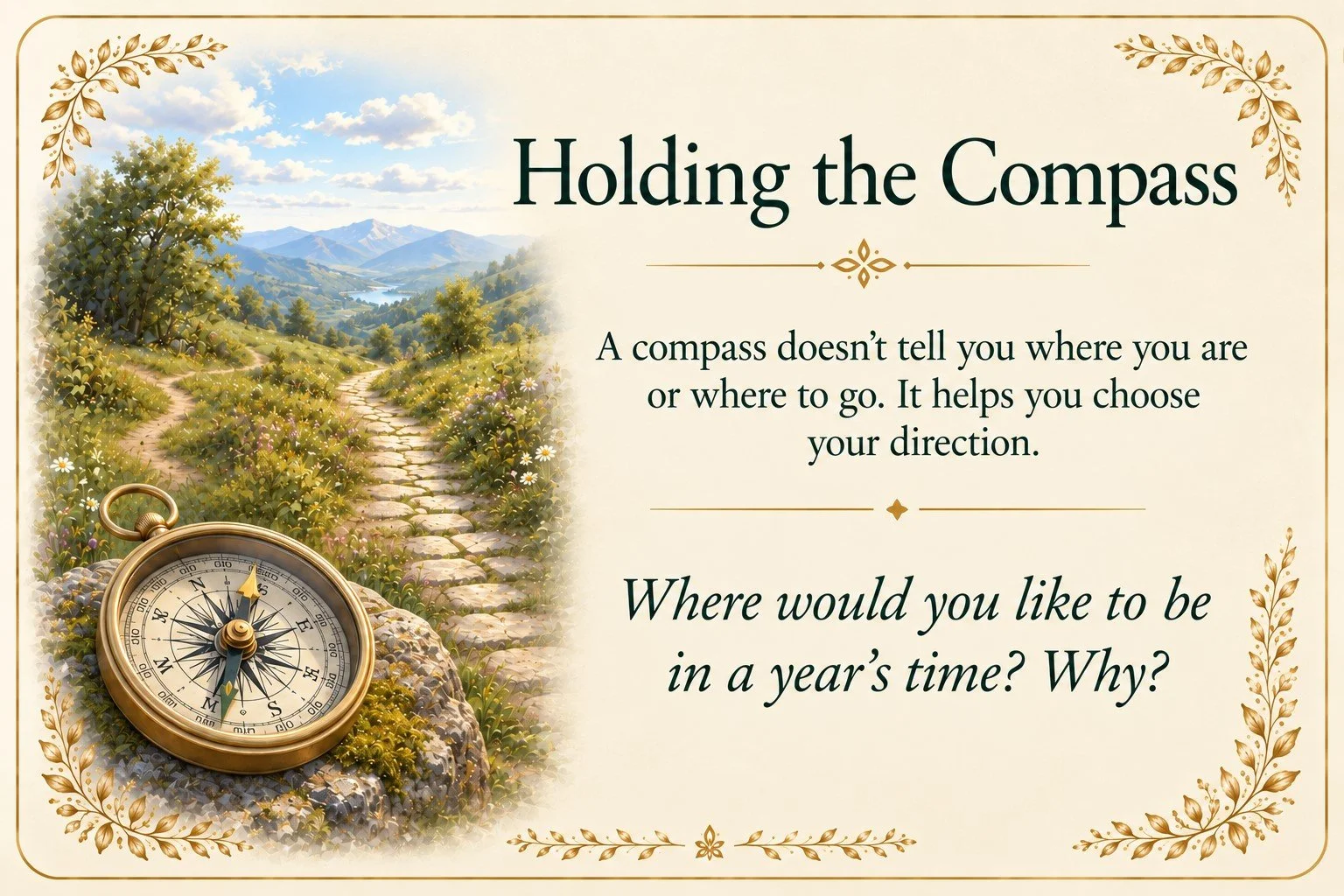
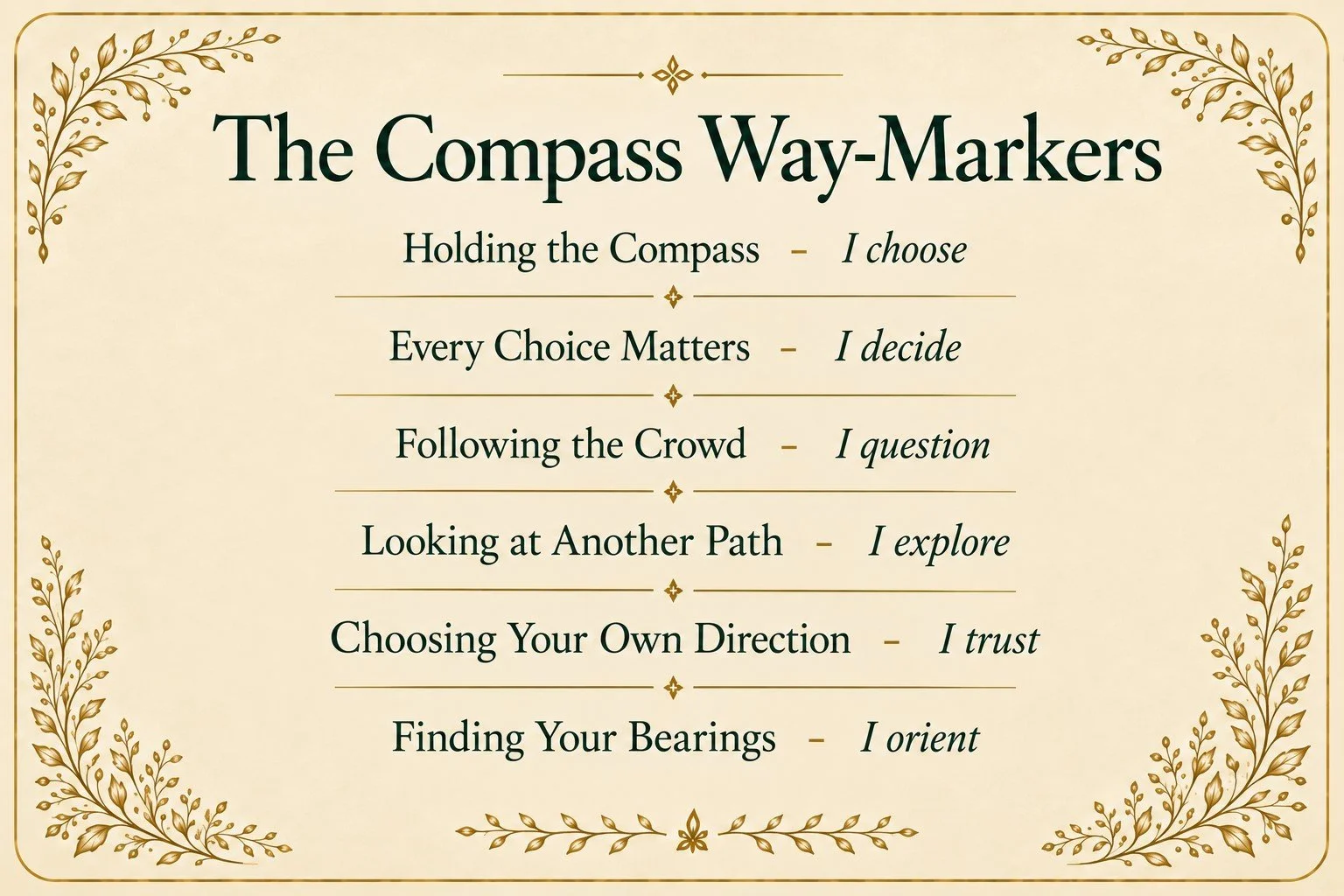
Way-Marker 1 : Holding the Compass
The Compass is a way of exploring the direction we are taking in life. We are not deciding whether the path is right or wrong. We are simply becoming aware of the direction we are taking.
The question asks us to become aware of where we are going, and where we want to go. Is the point of your compass pointing in the right direction?
The aim is simply to become aware of whether our goals and direction are coming from our own heart, or from what others expect of us.
Explorers Experiment
Take a moment to think about one area of your life where you feel you are heading somewhere. You could write at the top of a piece of paper
‘Where do I feel I am heading?’
Remember ‘Nowhere’ is as valid an answer as any other.
Now consider whether this is a direction you have consciously chosen, or simply the direction you have found yourself travelling in?
Did you become aware of any feelings in your body when answering these questions?
Way-Marker 2 : Every Choice Matters
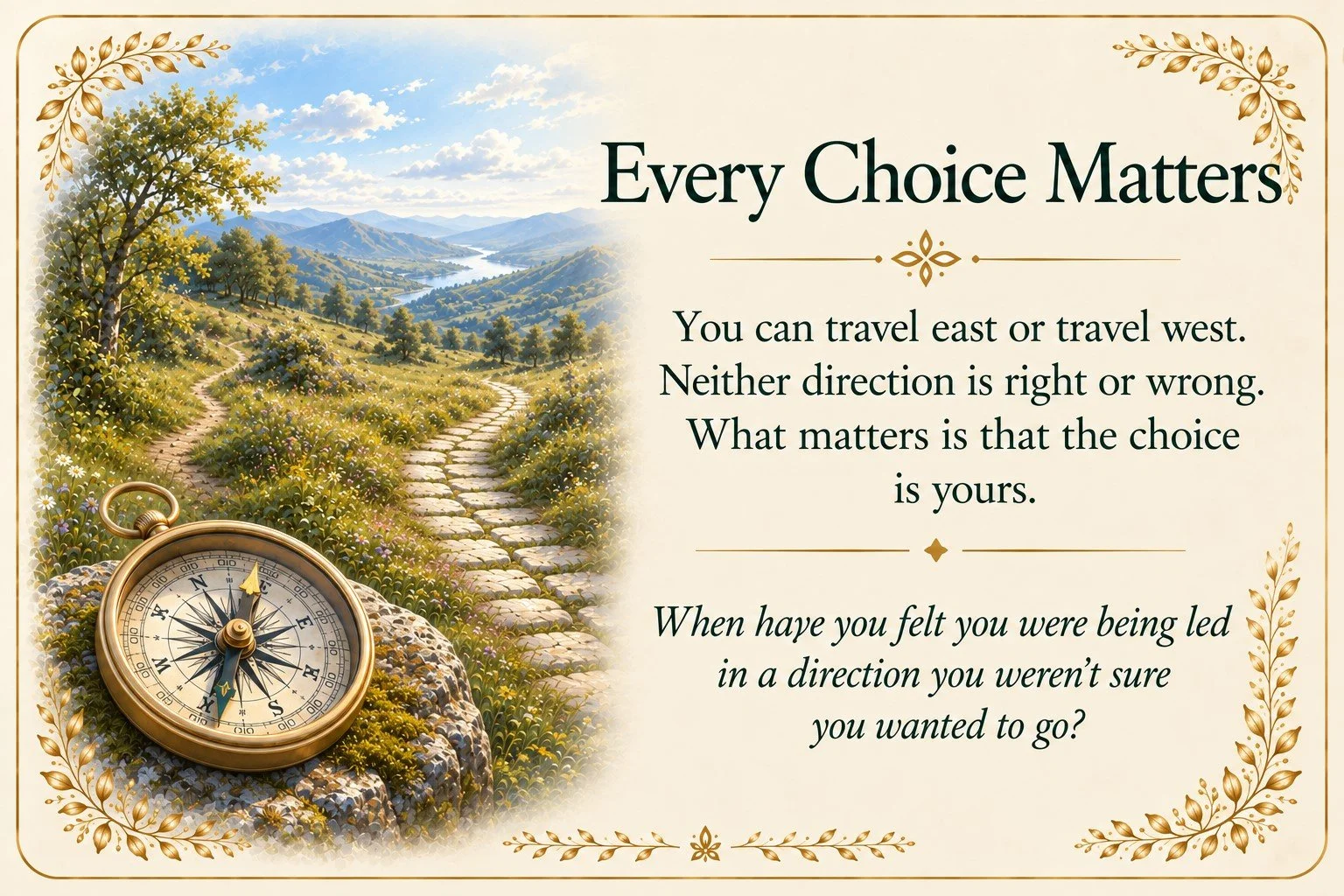
Many times we can come to a crossroads in our life. We may then be asked to make a choice. The choice doesn't have to be left or right. It might mean moving forward, turning back, or taking a completely different route. The Compass has many points.
The aim is simply to become aware of how we respond when asked to make a choice about the direction of our lives.
Explorers Experiment
Consider these questions, and make a choice quickly, without overthinking:
‘Someone asks you to do something you don't really want to do. Do you say yes or no?’
‘You have a free day. Do you make a plan or see what happens?’
‘Someone disagrees with you. Do you speak up or let it go?’
‘You are offered two opportunities. Do you choose the safe option or the exciting one?’
There are no right or wrong answers.
What did you become aware of about the way you make choices?
Consider what influences our choices..
what we want, what feels easiest, avoiding conflict, or what we think others expect of us.
Way-Marker 3 : Following the Crowd
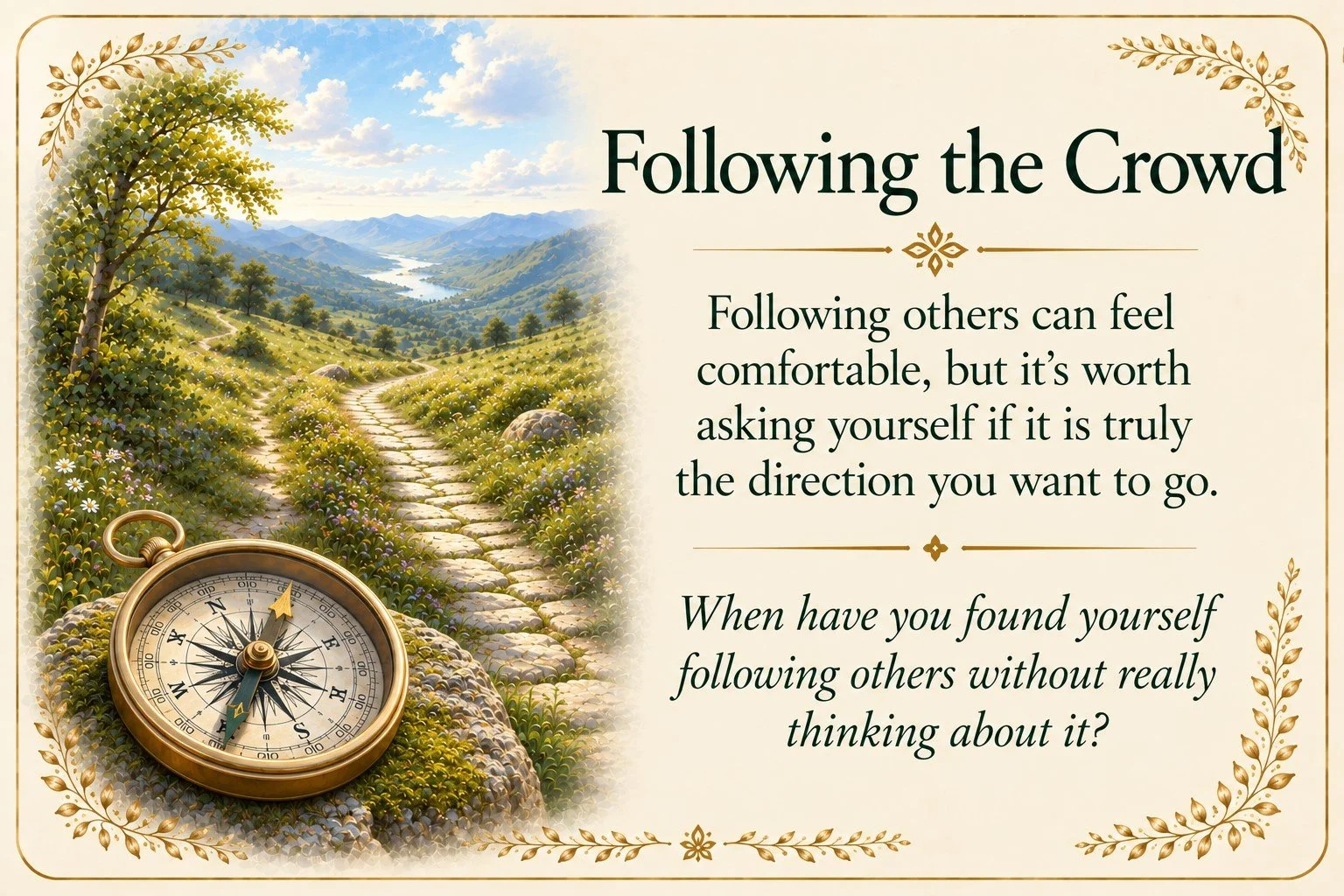
This card deepens the discussion and exploration around the directions we choose in life and why we choose them.
Did we follow the crowd at school? Did we do as we were told at work? Were we the rebel who always went in the opposite direction to everyone else?
All of these are examples of how we respond to directions being imposed, or choices being forced. None of them are right or wrong. They are just directions to take, or not.
The aim is simply to become aware of the different routes we have taken in life, and how consciously we chose them.
Explorers Consideration
“Following the crowd” can be a surprisingly universal experience.
Ask the card question and sit with it for a while. Maybe note down anything that comes to mind. It could be a story about school or a major life decision. Both are equally thought provoking.
Here, just develop your own way of questioning and exploring your various directions and paths. There is no need to judge whether any choice was right or wrong. Simply explore how consciously the direction was chosen.
Way-Marker 4 : Looking at Another Path
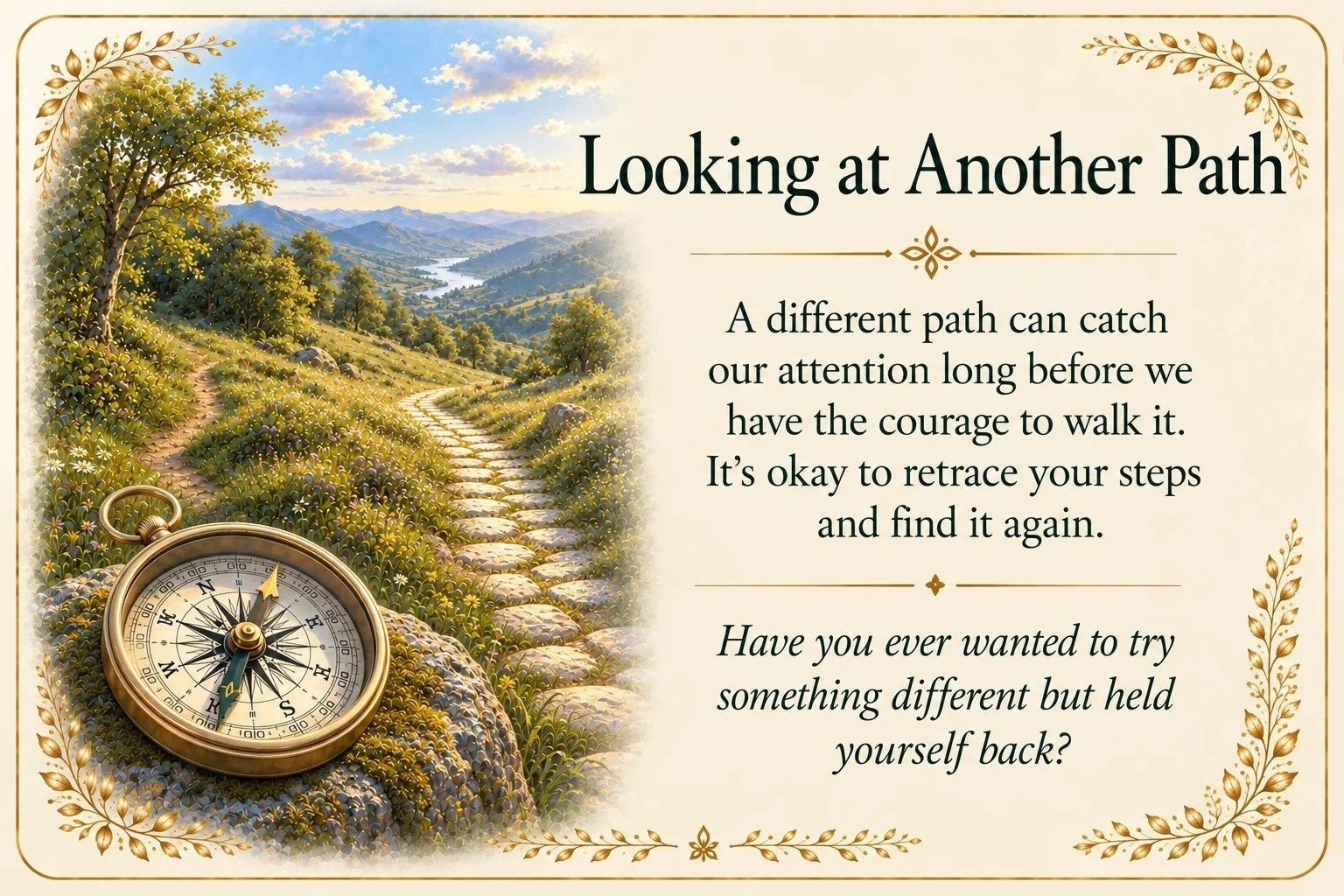
Earlier in this waypoint we mentioned the idea of going back the way we came.
This is often seen as a bad thing in society, ‘a u-turn’, ‘changing your mind’, ‘not being spontaneous’, and so on. But sometimes, we need to turn back, to find the point where we turn left instead of right, because the current direction just does not feel like the right way.
The aim is to become aware of how are current path feels, and how we can take a time out, stop on this path, sit down, and contemplate our direction. We can change it if we want to.
Explorers Experiment
Think of something you have wanted to try but held yourself back from doing.
It doesn't have to be something big. It could be something tiny — a different meal, a different route, speaking to someone, trying something new — or something bigger that you once considered.
‘What stopped you?’
You are invited to imagine (without needing to act on it):
What becomes possible if you simply allow yourself to imagine doing it?
There is no need to find a solution or make a decision. You are simply becoming curious about another path.
Way-Marker 5 : Choosing Your Own Direction
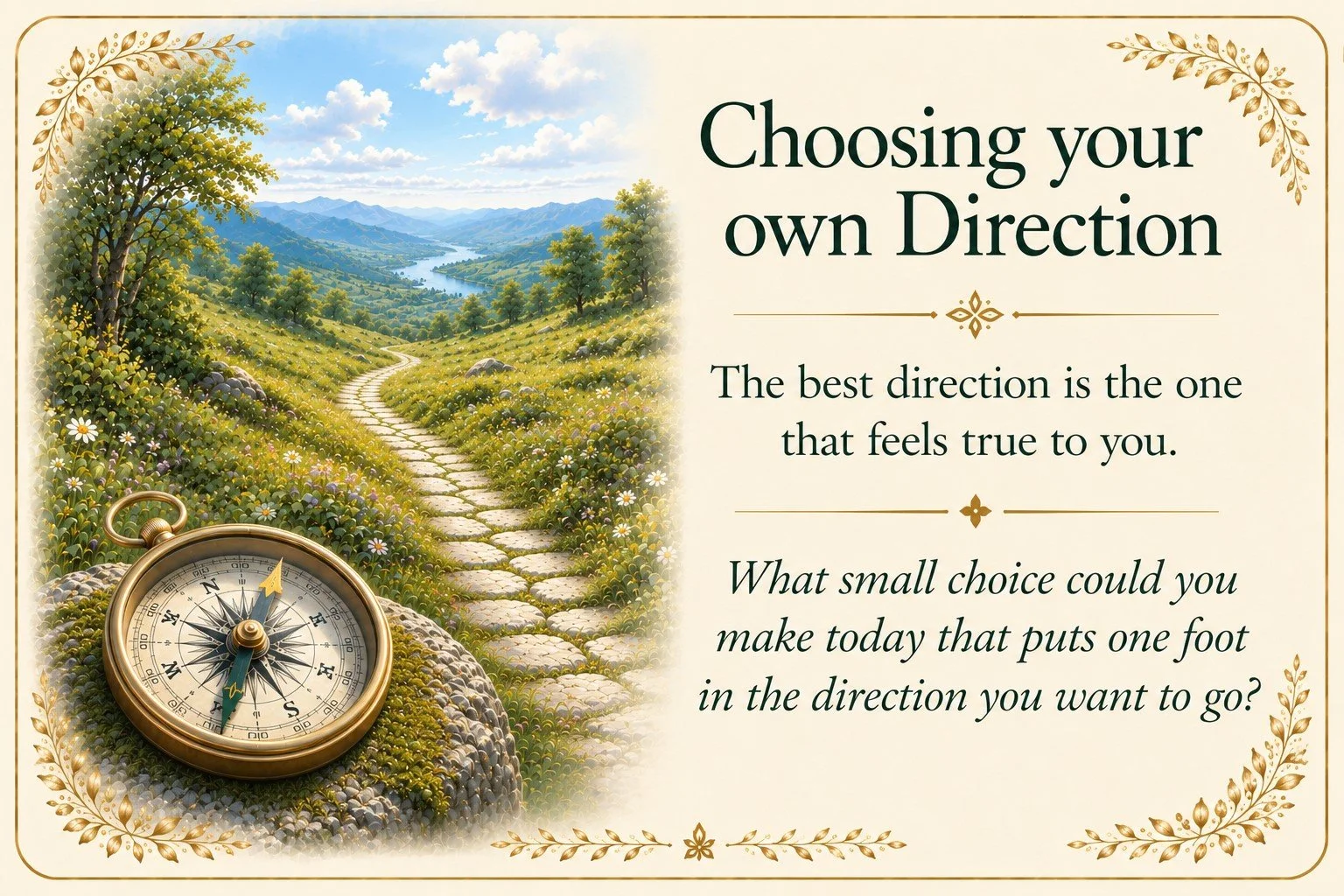
What direction are you currently taking and what alternatives could be possible. What might it take to change direction?
The aim is to be aware of what may be stopping us choosing our own direction, and what it might take to choose something different to where we are currently going.
Explorers Consideration
Consider your ‘ comfort zones’ – maybe it is more comfortable on this path because someone else is deciding the direction.
What feelings come up when you consider changing something? Try and name them.
Reference back to The Doorway and seeing the path, The Lantern lighting the way, and The Mirror reflecting back to us our true path, and the elements we explored there of Hope, Courage, and Curiosity.
There are no right or wrong answers, and there is nothing to fix.
This is always about becoming aware of where we are and discovering where that awareness could take us.
Staying exactly where you are is as perfect as changing direction.
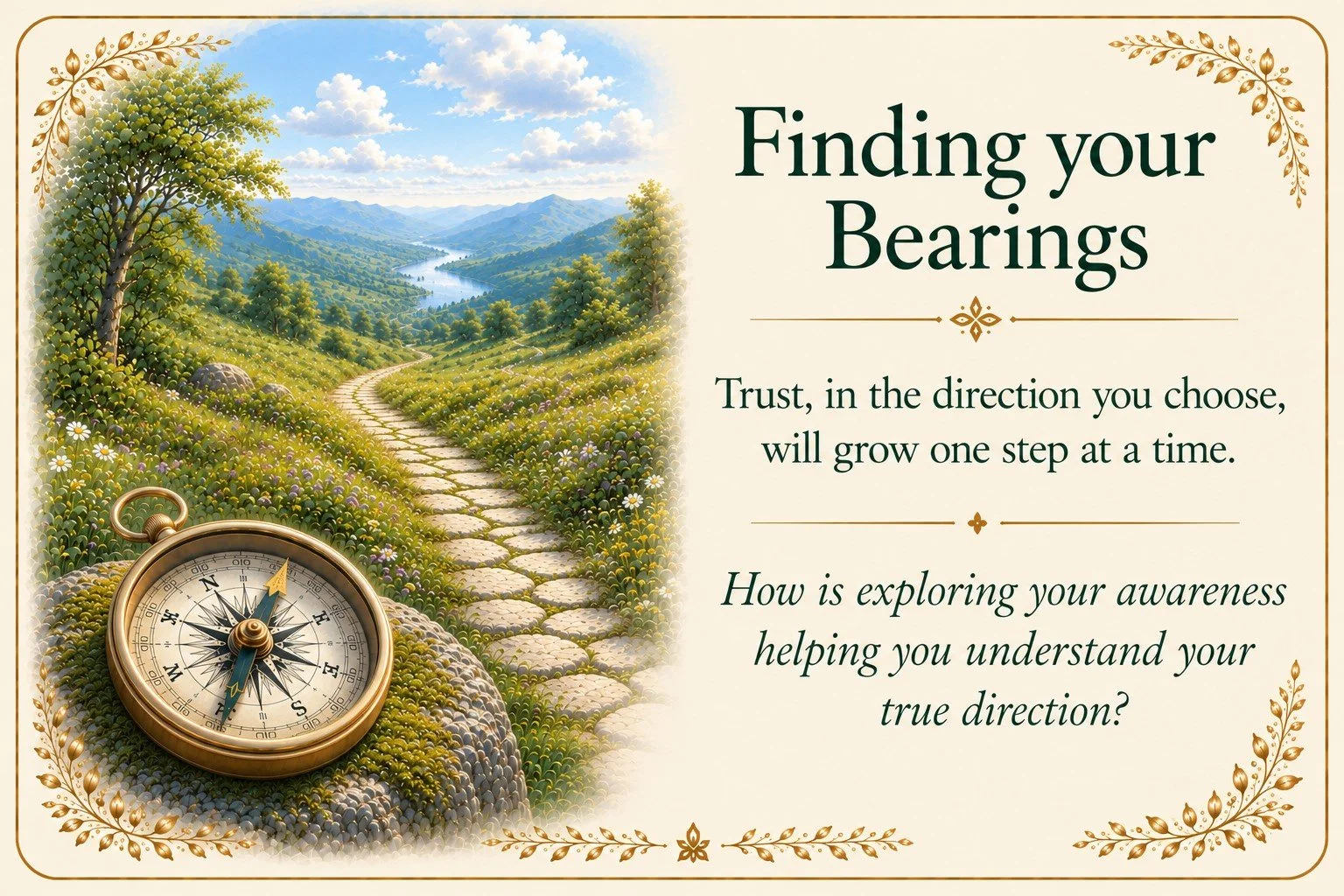
Way-Marker 6 : Finding Your Bearings
Closing the Waypoint
Allow the exploration to settle.
Consider the statement ‘Self Trust with Self Awareness’.
How might you know that the direction you have chosen feels right for you? You may feel a sense of alignment, curiosity or possibility. It may not always feel easy, but there may be something within you that says, “Yes, this is my direction.”
There may even be little signs, way-markers, that pop up as you go. Allow your feelings about different directions go where they want to go and learn to recognise them, and possibly name them.
Consider your thoughts and start to link a feeling to a thought.
You are becoming aware of your thoughts and the associated feelings that arise from those thoughts.
This last card at this waypoint asks us to orient ourselves by becoming aware of where we are, where we are heading, and the reasons behind the direction we have chosen.
The aim is to develop trust in the direction we choose, and in our ability to re-orient ourselves when we need to.